

• Home
  • FIT Program
  • Projects
  • FAQ
  • Solar Proposal
  • About Us

Solar energy company

main

FAQs

  • Basic Terminology
  • Science of Solar Panels
  • Solar Trackers
  • Payments & Sales Taxes
  • Connecting to the Grid
  • Optimizing Output

Jump to a Definition...

  • Array
  • Azimuth
  • Balance of system (BOS)
  • Cell
  • Conversion efficiency (cell or module)
  • Inverters
  • Kilowatt (kW)
  • Kilowatt-hour (kWh)
  • Module
  • Photovoltaic (PV)
  • Tracking array
  • Watt (W)
Terminology

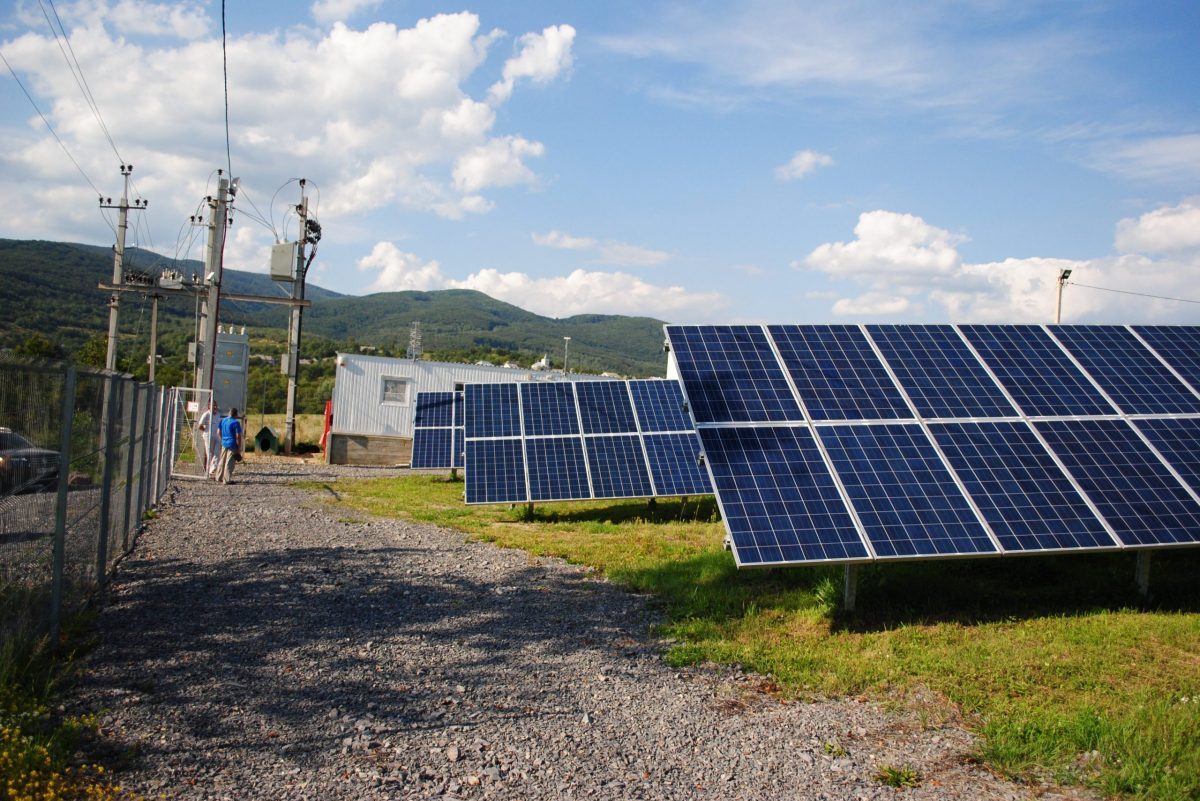
Array

A number of photovoltaic modules connected together to provide a single electrical output.

Azimuth

Angle between the north direction and the projection of the surface normal into the horizontal plane; measured clockwise from north. As applied to the PV array, 180 degree azimuth means the array faces due south.

Balance of system (BOS)

Represents all components and costs other than the PV modules. It includes design costs, land, site preparation, system installation, support structures, power conditioning, inverters, operation and maintenance costs, batteries, indirect storage, and related costs.

Cell

The basic unit of a photovoltaic panel or battery.

Conversion efficiency (cell or module)

The ratio of the electric energy produced by a photovoltaic device (under one-sun conditions) to the energy from sunlight incident upon the cell.

Inverters

Devices that convert DC electricity into AC electricity (single or multiphase).

Kilowatt (kW)

1000 watts.

Kilowatt-hour (kWh)

One thousand watts acting over a period of 1 hour. The kWh is a unit of energy (1 kWh=3600 kJ).

Module

A number of PV cells connected together, sealed with an encapsulant, and having a standard size and output power; the smallest building block of the power generating part of a PV array. Also called panel.

Photovoltaic (PV)

Pertaining to the direct conversion of light into electricity.

Tracking array

PV array that follows the path of the sun to maximize the solar radiation incident on the PV surface. The two most common orientations are (1) one axis where the array tracks the sun east to west and (2) two-axis tracking where the array points directly at the sun at all times. Tracking arrays use both the direct and diffuse sunlight. Two-axis tracking arrays capture the maximum possible daily energy. Typically, a single axis tracker will give you 15% to 25% more power per day, and dual axis tracking will add about 5% to that. The gain depends on latitude and season.

Watt (W)

The unit of electric power, or amount of work (J), done in a unit of time. One ampere of current flowing at a potential of one volt produces one watt of power.


© 2010 Solarize Energy LP